Be Captivated and be inspired!

Guest Artist for April 2026
Eric Kutschker
Artist Biography
Eric Kutschker was born and raised in northern BC, with roots in the Swabian settlement of Tom’s
Lake, on Treaty 8 territory. After graduating from high school, Eric began working as Assistant
Driller in the Geotechnical department of CN Rail. Upon completion of his Welding Ticket at NAIT,
he took on the job of Carman at CN Rail, utilizing and honing his welding skills.
Eric received his Bachelor of Fine Arts from the University of Lethbridge in 1994. Studying under
notable Canadian artists such as Jeffrey Spalding and Janet Cardiff, he developed his style of
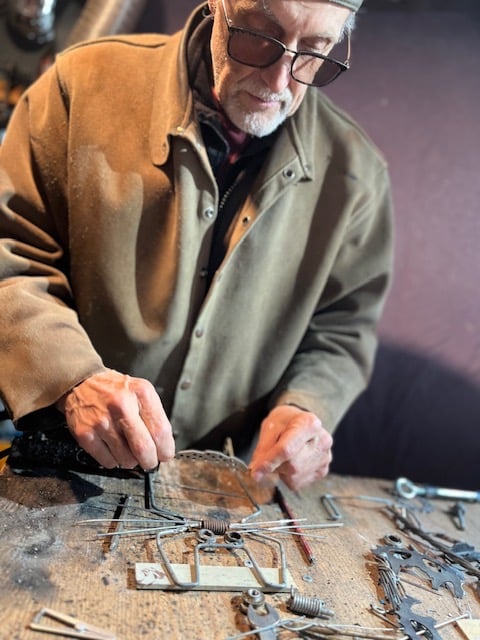
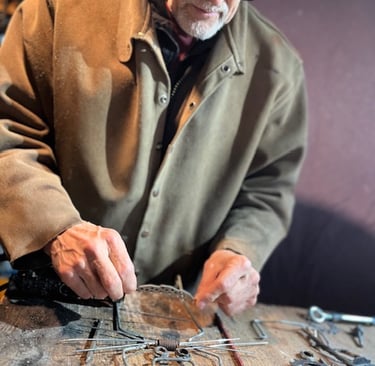
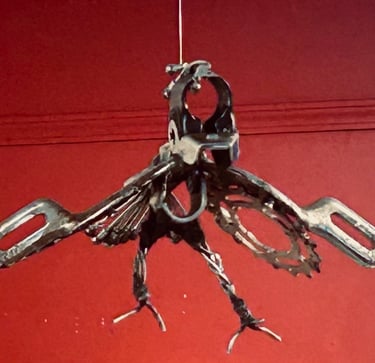
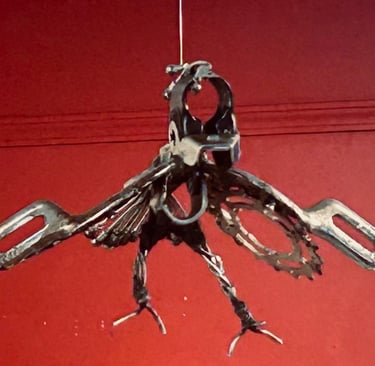
assemblage using found metal objects, tools and farm equipment. During that time he also worked
as Studio Technician, supporting students in operating electrical equipment and tools. Upon
graduation, he and his partner worked at a screenprinting business, built their own studios, and
continued to find ways to create using existing and repurposed materials.
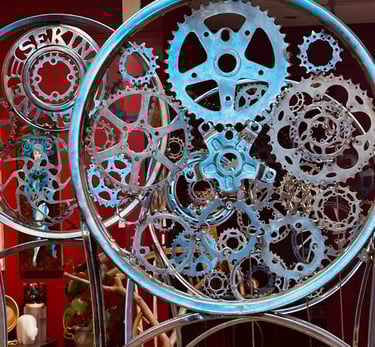
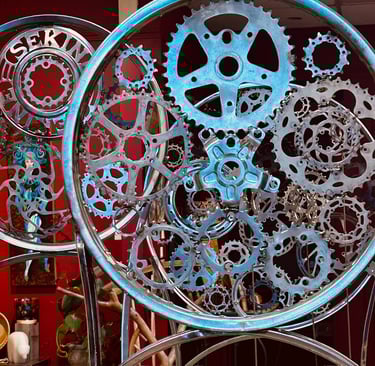
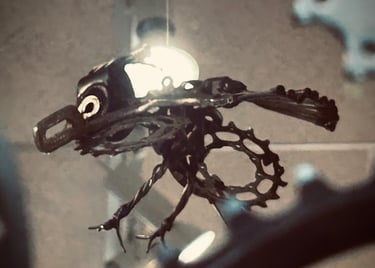
Eric began collecting used bike parts when invited to create a sculpture for the exhibition “The
Bicycle as an Agent of Social Change” at Salmon Arm Art Gallery in 2011. The next year, a new
grocery store in Salmon Arm was in need of bike racks, and Eric proposed sculptures made from
bike parts. Working many hours taking apart old bike frames and scavenging parts from friends
and bike repair shops, Eric then welded brake rotors, seat frames, chain rings, fenders, sprockets,
pedals, forks, handlebars and kickstands onto old steel bike frames. The “revival racks” were
installed at the Askews Uptown in Salmon Arm in April of 2013, and inspired Eric’s current arts
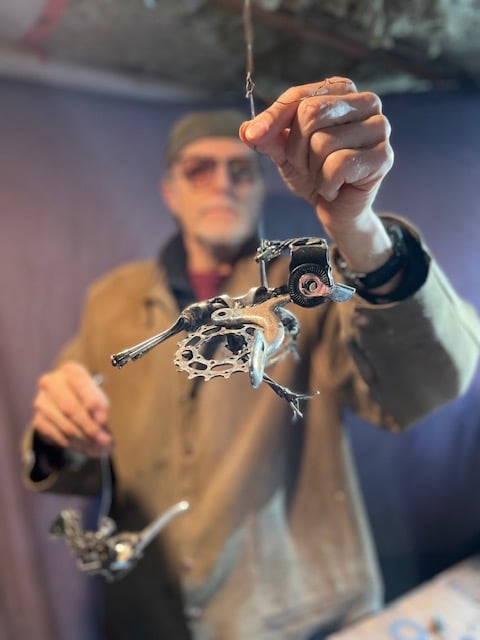
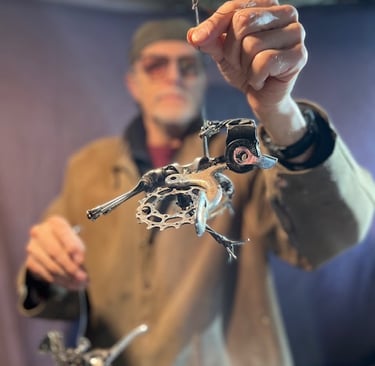
practice of combining bicycle culture and repurposed metal. Eric has been commissioned twice by
the City of Salmon Arm for public sculptures, and has created revival bike racks for community
groups and municipalities in BC and Alberta.
Artist Statement
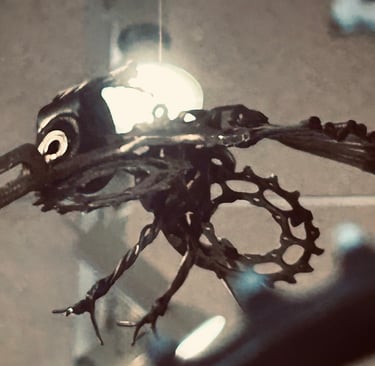
Forged many years ago, each metal object in Eric’s sculptures were made to fulfill a specific role.
Now, they have a history and have seen the end of their initial purpose. Diverting used and worn
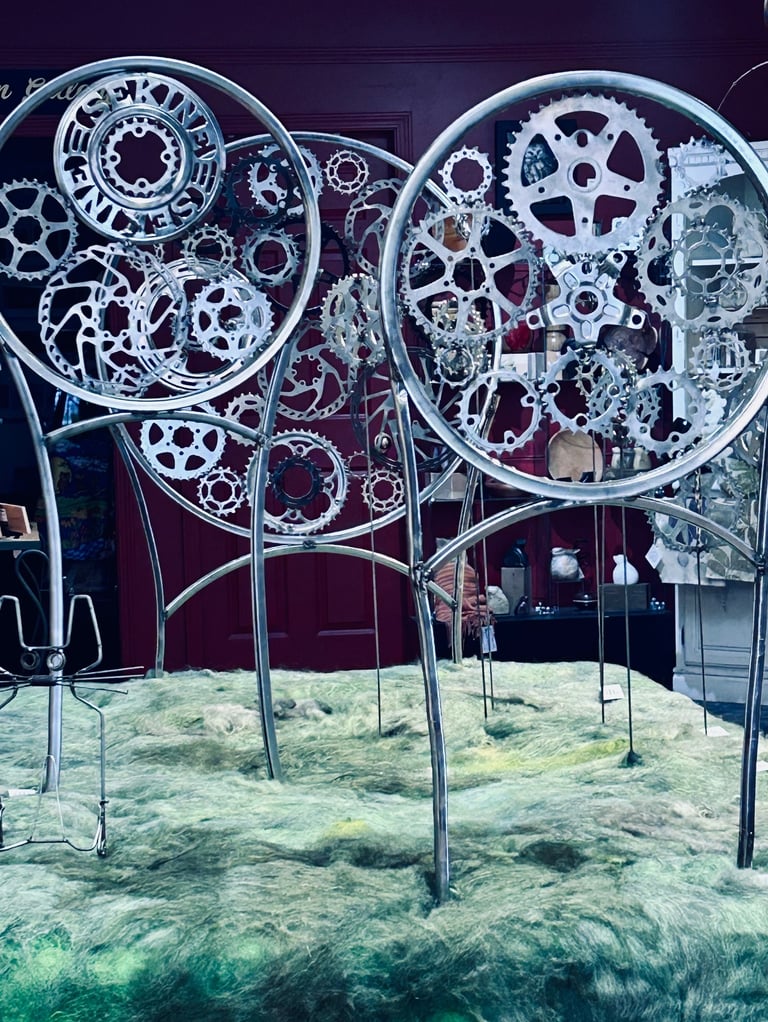
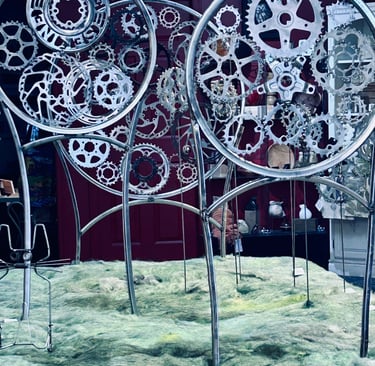
out tools, parts and equipment from the landfill is an important focus to Eric’s work. His current
garden series is meant to support the growth of small urban efforts toward food security and
highlight the role that pedal-power can bring to our neighbourhoods.
Address
104 - 907 Belvedere Street
Enderby, BC, V0E 1V0
P.O. Box 515 Enderby, BC, V0E 1V0
Contacts
778 443 0529
info@courtyardgallery.ca
Become A Member
Click the button to download our Membership application.